PHP vs. Residential Treatment
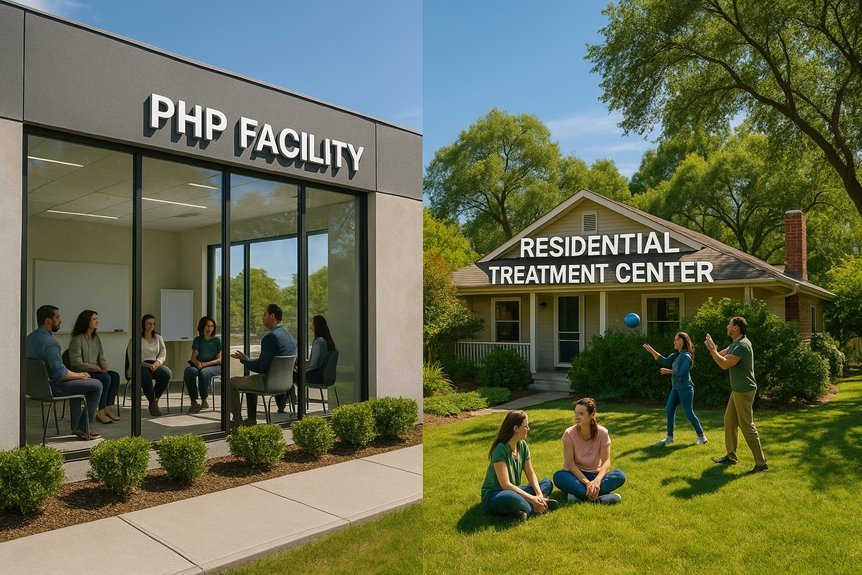
Choosing between Partial Hospitalization Programs (PHP) and residential treatment is essential for your recovery process. You'll need to weigh your personal goals, recovery readiness, and lifestyle needs. PHP offers structured therapy while letting you handle daily responsibilities, making it great for moving away from inpatient care. Residential treatment, however, provides around-the-clock support and intensive therapy, requiring more commitment. Which path aligns best with your long-term recovery goals?
Choosing Between PHP and Residential Treatment
How do you decide between PHP (Partial Hospitalization Program) and residential treatment? Start by evaluating your personal goals and treatment preferences.
Assess your recovery readiness and consider how lifestyle factors, like work or school, might influence your choice.
Evaluate your recovery readiness and how work or school commitments might shape your treatment decision.
Look at your support systems—do you have a strong network, or do you need more structured support?
Family involvement is vital; discuss options with them.
Explore the therapy types offered in each setting and consider what aligns best with your needs.
Finally, examine available community resources to guarantee they complement your treatment path.
Each decision point guides you toward the right fit.
Who Benefits From Partial Hospitalization Programs?
Evaluating who benefits from Partial Hospitalization Programs (PHP) involves understanding specific needs and circumstances.
You’ll find that PHP suits patient profiles needing intensive care without full-time residency. It's ideal for those moving from inpatient treatment or seeking more structure than outpatient care.
These programs offer thorough treatment outcomes by providing therapies and medical monitoring tailored to individual needs.
If you’re balancing daily responsibilities like work or family, PHP allows you to receive high-level care while maintaining daily routines.
It’s especially effective for patients needing a structured environment to support recovery while living at home.
Liberation Way's helpline is free, confidential, and available 24/7. A treatment specialist can help you understand your options.
Call (866) 275-3142A Day in PHP
In a Partial Hospitalization Program (PHP), your day is structured around evidence-based therapeutic activities designed to support recovery.
You'll participate in individual and group therapy sessions, focusing on building coping skills and addressing underlying issues.
This approach balances intensive treatment with the flexibility to return home each evening.
PHP Daily Structure
When you engage in a Partial Hospitalization Program (PHP), your day is structured to provide intensive therapeutic support while allowing you to return home at night.
Efficient php scheduling techniques and php time management guarantee you meet php daily goals. Each day’s php activity planning creates a routine that highlights php structure benefits and php routine importance.
You’ll find php flexibility options that cater to your needs, enhancing php patient engagement. Progress is monitored through php progress tracking, while php support systems offer continuous guidance.
This structured yet adaptable approach builds a balanced environment, promoting recovery and personal growth.
Therapeutic Activities Overview
Although every day in a Partial Hospitalization Program (PHP) is unique, they typically offer a rich blend of therapeutic activities designed to promote healing and growth.
You'll engage in structured sessions that incorporate:
- Creative Expression: Art therapy and therapeutic games facilitate emotional regulation and skill development.
- Mindfulness Practices: These enhance physical wellness and self-care strategies through experiential learning.
- Group Dynamics: Participate in activities supporting communication and relationship-building, essential for personal growth.
These evidence-based activities focus on developing resilience and emotional intelligence, enabling you to work through life's challenges effectively.
The integrative approach guarantees a thorough treatment experience.
Could Residential Treatment Be Your Fit?
When considering residential treatment, it's essential to evaluate the duration of care you need, as programs often offer longer and more intensive support.
Assess your support requirements, including 24/7 supervision and extensive therapy options.
Additionally, weigh the cost factors against the potential benefits to determine if this level of care aligns with your needs.
Understanding Treatment Duration
Evaluating treatment options can feel overwhelming, but understanding the duration of each can guide your decision. Residential treatment typically involves a more extended stay, often ranging from 30 to 90 days, providing intensive support.
Here’s what to reflect on:
- Treatment Timelines: Residential programs offer a structured timeline, which can be essential for severe cases.
- Program Flexibility: While longer, residential programs may not offer the flexibility of a Partial Hospitalization Program (PHP), which allows you to return home daily.
- Commitment Level: Residential treatment requires a significant time commitment, ideal if you're seeking a thorough approach without daily distractions.
Assessing Support Needs
Determining the right level of support is vital in choosing between a Partial Hospitalization Program (PHP) and residential treatment.
Start with a thorough support assessment to evaluate your specific needs. Consider how your treatment goals align with individualized support options.
Assess risk factors and emotional readiness to determine the intensity of care required. Family involvement and resource availability play significant roles in your decision.
Personal motivation is key; it drives your commitment to the chosen path. Effective care planning guarantees you receive the best fit for your circumstances, providing a clear roadmap to recovery and long-term well-being.
Evaluating Cost Factors
While evaluating the cost factors of treatment options, it’s crucial to weigh financial considerations against the potential benefits. Understanding cost comparisons between PHP and residential treatment can guide your decision.
Consider:
- Insurance Coverage: Check your policy for what's included. Coverage can greatly reduce out-of-pocket expenses.
- Program Fees and Hidden Expenses: Residential treatment often involves higher upfront fees. Don't overlook additional costs like transportation or special therapies.
- Financial Aid and Budget Planning: Explore available financial aid options. Effective budget planning guarantees treatment affordability.
Track expenses meticulously to avoid surprises and make informed choices about your treatment path.
What to Expect in Residential Treatment
When entering residential treatment, you’ll find a structured environment designed to facilitate recovery and healing.
Residential expectations include living within a therapeutic community where personal growth is nurtured. The treatment environment offers emotional support and focuses on your path to recovery.
You'll follow a daily routine that promotes stability, while group dynamics encourage connection with others. Individualized care guarantees your unique needs are addressed, helping you develop effective coping strategies.
This immersive setting encourages a sense of belonging and accountability, essential for sustained progress. Overall, it’s a transformative experience aimed at supporting you to achieve lasting recovery.
Financial Considerations: PHP vs. Residential
Understanding the financial considerations of treatment options is essential when deciding between Partial Hospitalization Programs (PHP) and residential treatment. You'll need to weigh several factors:
- Cost Comparisons: PHP generally costs less than residential treatment, but it's vital to evaluate hidden expenses like transportation.
- Insurance Coverage: Check your policy details. Some plans cover more for one type of treatment than the other, impacting your budget planning.
- Long Term Costs: Consider potential financial aid and treatment financing options to manage expenses effectively.
A thorough value assessment will help determine which option aligns best with your financial situation.
Flexibility in Partial Hospitalization Programs
In a Partial Hospitalization Program, you’ll find customized treatment schedules that cater to individual needs, providing a significant degree of flexibility.
This approach allows you to maintain a balance of independence while still receiving structured care.
Additionally, adjustment support strategies are in place to guarantee a smooth shift back into daily life.
Customized Treatment Schedules
While exploring the world of addiction treatment, Partial Hospitalization Programs (PHPs) offer a unique advantage with their customizable treatment schedules.
These programs excel in crafting individualized plans that adapt to your needs. Here’s how they do it:
- Patient Involvement: Actively participate in setting treatment goals, ensuring therapy frequency aligns with your recovery path.
- Family Engagement: Build a supportive environment through progress tracking and whole-person approaches, enhancing recovery outcomes.
- Flexibility: Benefit from peer support and crisis management, maintaining effective feedback loops to optimize your path forward.
PHPs prioritize adaptability, providing a tailored approach for successful rehabilitation.
Balance of Independence
Although managing addiction recovery can be challenging, Partial Hospitalization Programs (PHPs) strike an essential balance between structure and autonomy. PHPs offer independence benefits by allowing you to maintain daily routines while receiving intensive care. This treatment autonomy enables you to apply learned strategies in real-world settings.
| Aspect | PHP Advantage |
|---|---|
| Daily Structure | Intensive support |
| Flexibility | Maintain personal routines |
| Autonomy | Real-world application |
These programs enable you to stay connected with your support network, building resilience. By adopting this balance, PHPs help you shift effectively, promoting sustainable recovery through practical independence.
Transition Support Strategies
Building on the balance of independence found in PHPs, you’ll discover the value of flexible support strategies designed to aid your move into everyday life.
Guiding through transitional challenges becomes manageable with these key elements:
- Support Networks: Engage in peer support and family involvement to strengthen emotional resilience.
- Skill Development: Focus on self-management techniques and coping strategies for everyday situations.
- Aftercare Planning: Guarantee community integration through personalized aftercare plans.
Immersive Support in Residential Treatment
| Aspect | Benefit |
|---|---|
| Immersive Experiences | Emotional healing |
| Community Support | Strong therapeutic bonds |
| Comprehensive Approaches | Extensive care |
These elements combined create a nurturing atmosphere, promoting personal growth and resilience as you manage the path to recovery.
How to Choose Your Ideal Care Level
Immersive support in residential treatment helps create personal growth and resilience. To choose your ideal care level, start by evaluating your needs with self-assessment tools.
Immersive residential treatment enhances growth and resilience; begin by assessing your needs with self-assessment tools.
Consider these steps:
- Identify Your Needs: Reflect on your current situation and challenges. Are you facing severe issues that require constant support, or can you manage with less intensive care?
- Consult Professionals: Engage with healthcare providers for a thorough care level evaluation. Their expertise can guide your decision.
- Evaluate Options: Weigh the benefits of PHP versus residential treatment. Consider factors like structure, flexibility, and support intensity.
Long-Term Success: PHP vs. Residential
When considering long-term success, understanding the differences between PHP (Partial Hospitalization Program) and residential treatment is essential. Both options aim for positive treatment outcomes, but success metrics vary.
PHP offers flexibility, allowing you to integrate recovery into daily life, which can boost self-reliance and adaptability. However, residential treatment provides a structured environment, minimizing external distractions and focusing intensely on recovery.
Studies suggest each approach yields effective results, but your specific needs dictate the best fit. Evaluate success metrics like relapse rates and sustained sobriety to determine which aligns with your goals. The right choice supports lasting recovery.